Common Mistakes in Mobile App Planning
Planning is the least visible stage of an app project, but it shapes everything that follows. Many difficulties that appear late in a project — overruns, confusing interfaces, low engagement — can be traced back to a handful of common planning mistakes.
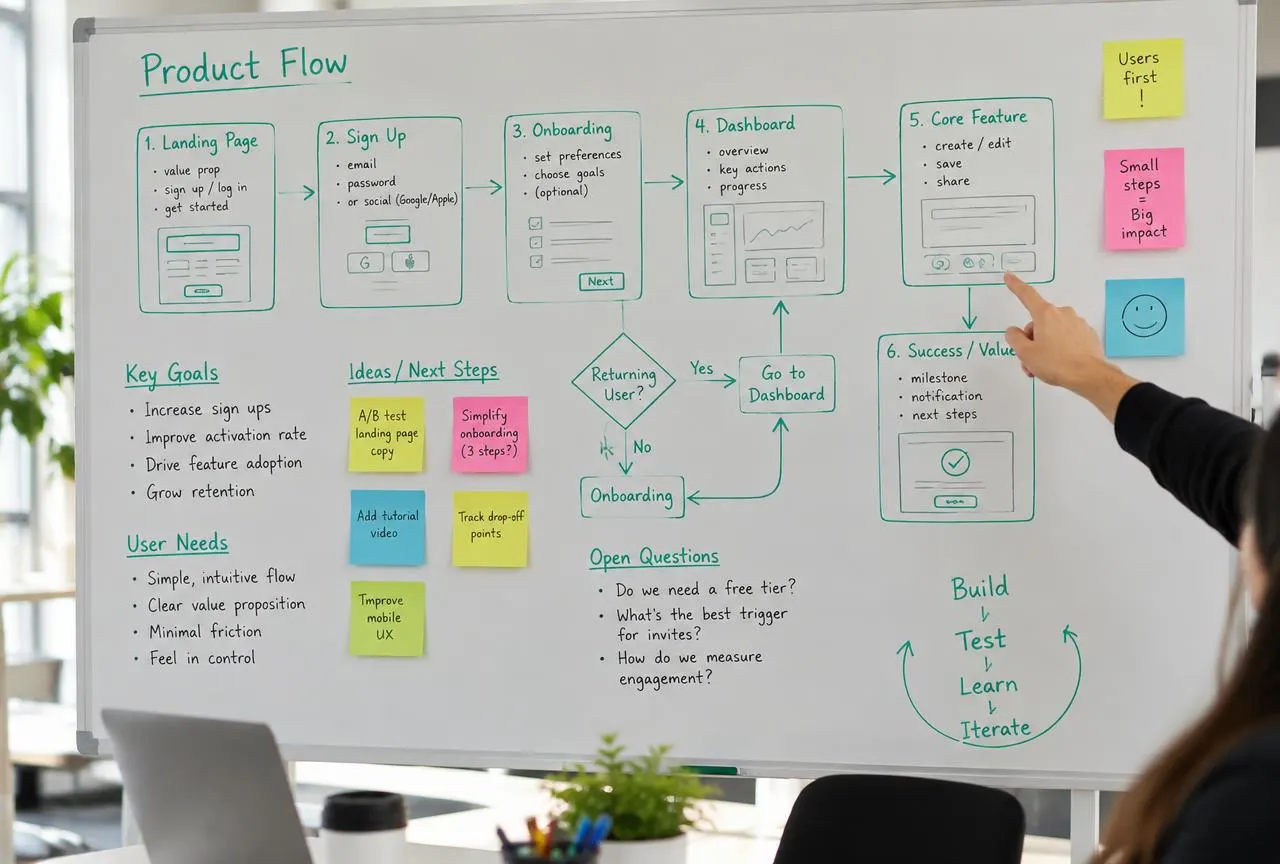
Trying to build everything at once
A first release packed with features takes longer to build, is harder to test and is often harder to use. Focus on the core flows and add features based on real feedback.
Designing for “everyone”
Without a clear audience, every feature seems equally important. Choosing a primary audience makes priorities clear.
Skipping the problem definition
Starting with a feature list instead of a problem often leads to an app that does many things but solves nothing particularly well.
Related service: Mobile app development services. Related solution: Productivity app development.
Underestimating onboarding
The first few minutes determine whether a user stays. Onboarding, permissions and empty states need design attention from the beginning. See our article on onboarding principles.
Leaving testing until the end
Testing only at the end turns small issues into expensive ones. Regular reviews, prototype tests and device testing throughout the project catch problems while they are still easy to fix.
Ignoring life after launch
Launch is the start of a product's life, not the end. Plan for feedback, updates, platform changes and ongoing maintenance.
Not budgeting for content and store materials
Exercise libraries, onboarding copy, store screenshots and descriptions all take time. Including them in planning avoids last-minute pressure.
In short
Thoughtful planning keeps projects focused and realistic. Our development process dedicates two stages to discovery and planning for this reason.